
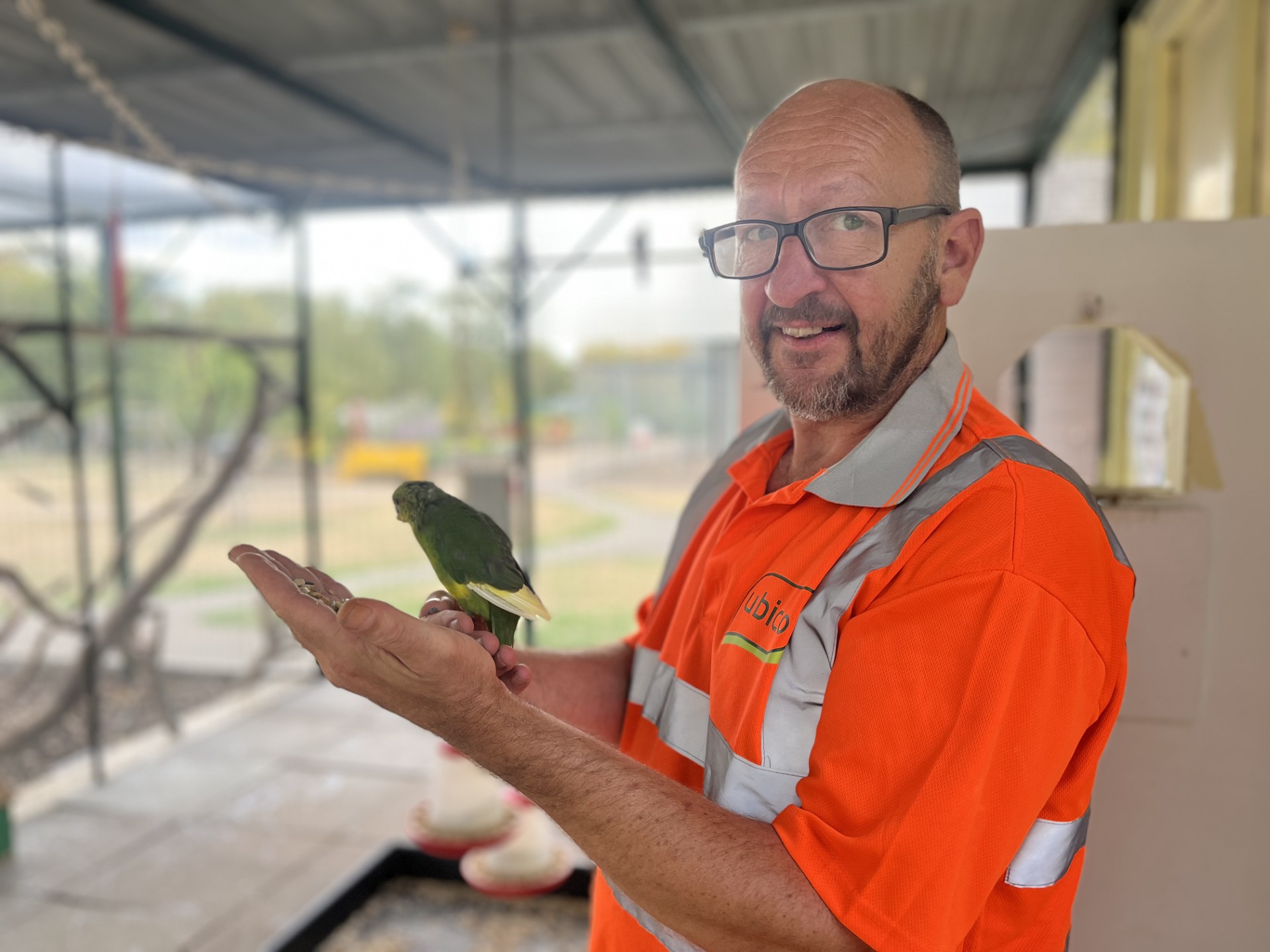
For generations of Cheltenham families, the aviaries have been a much-loved feature of Pittville Park. But caring for them is no small task. We spoke to Mark Thorndale to find out about his role at Ubico and looking after the animals and aviaries.
Q: How long have you worked in Pittville and what does your typical day involve?
Mark: I’ve been looking after the park and aviaries for about two and a half years. Most people know me as “Mark from Pittville Park”!
I start early. My first job is picking up litter and cleaning and maintaining the play area, particularly the water feature and sand pit, to ensure they are clean and safe for the children. I then weed and water the Sensory Garden and flower beds.
Then there’s the aviaries. I check every cage for any damage, ensure it is all secure, and clean everything down; jet wash the bars and provide fresh food and water. There’s always something to do!
Pittville is my main area, but I also help clean and maintain some of the pavilions and car parks around Cheltenham too.
Q: Tell us about the animals living in the aviaries.
Mark: We’ve got quite a mixture. There are parakeets, cockatiels, finches, chickens, golden pheasants, rabbits and a dove. The parakeets are from New Zealand, and the cockatiels are from Australia. We’ve also got some young finches at the moment that are only a couple of weeks old. My favourites are the parakeets. I looked after two of them when they were babies, so they’re particularly tame and will sometimes land on me when I’m in their cage.
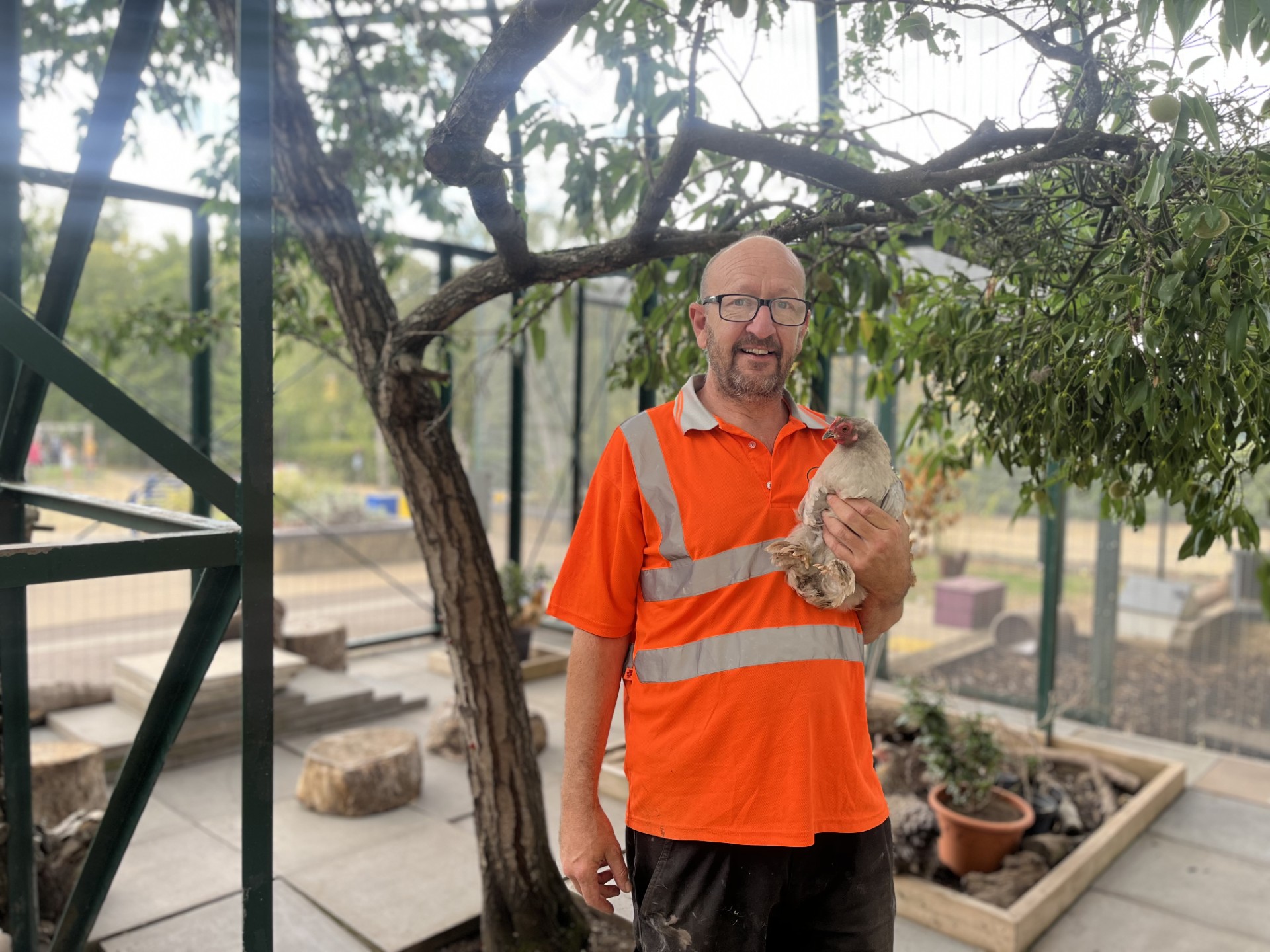
We recently had three very friendly grey chickens donated. They’re so tame that they’ll come straight up to you and can even be picked up. Some of the chickens lay eggs and we can get around 10 to 12 every few days.
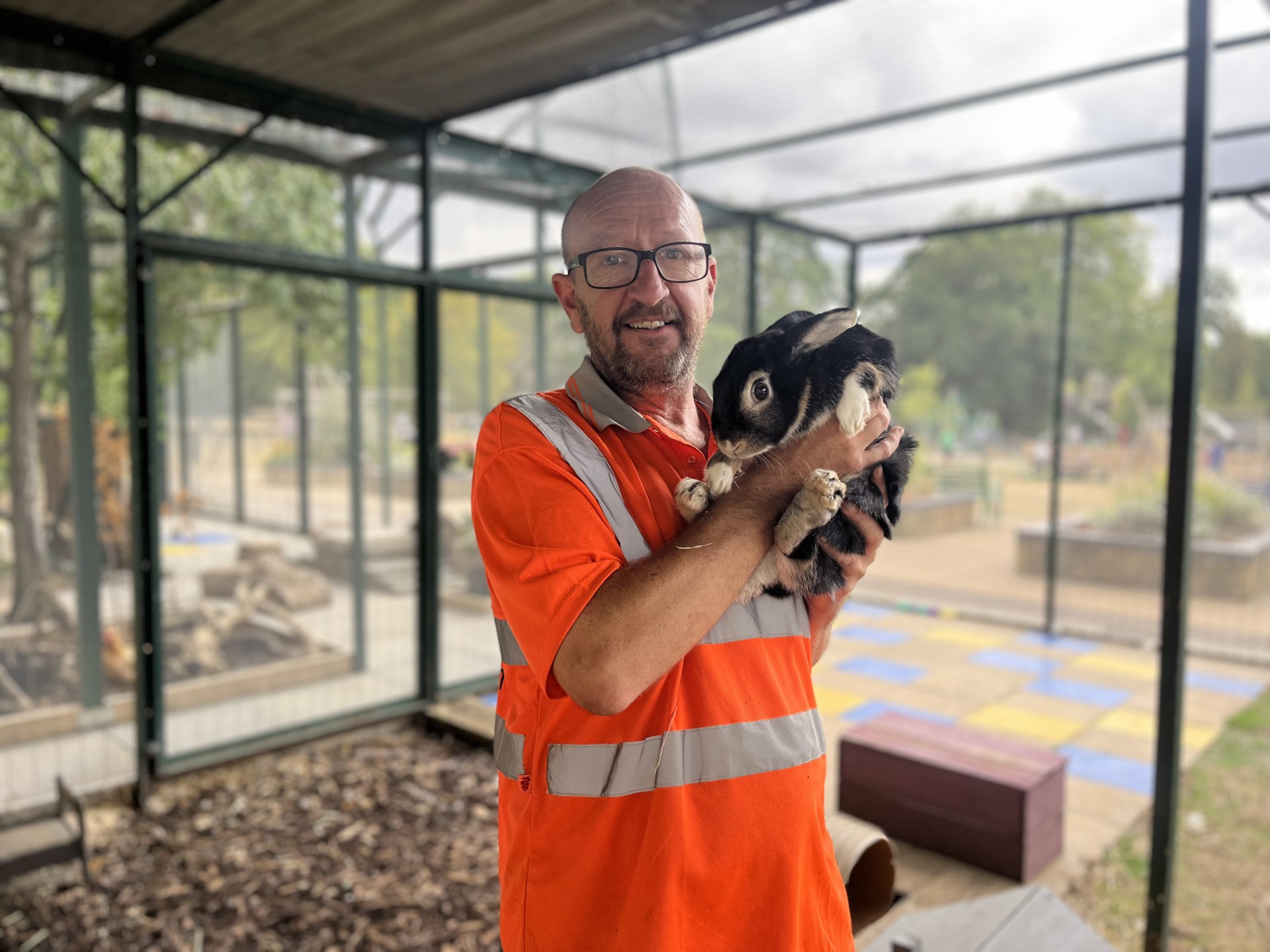
We also have a family of three rabbits that came from the animal shelter. They’re very close-knit. We tried introducing other rabbits, but they weren’t having any of it!
Q: What is the most challenging part of looking after so many different animals?
Mark: Making sure they are happy and healthy and getting along with each other. If an animal is injured, I will take them to the vet and if we get a call from a concerned member of the public, I will come down at any time of the day to make sure they are OK. Even on Christmas Day, I’m at the aviaries feeding them.
The biggest job is the cleaning though. It has to be done every day. You have to get inside the cages, clean the bars, change the bedding and keep everything hygienic.
Q: How do you cope with extreme weather?
Mark: In the colder months, the animals have heated indoor areas where they can go, but I need to make sure their water doesn’t freeze. In hot weather, I ensure there is plenty of water and shade. Most of the birds are from warmer countries, so they’re quite used to heat, but the rabbits aren’t, so they spend a lot of time in their shaded areas.
Q: You’ve done a huge amount of work improving the aviaries. What have you changed?
Mark: My aim is to keep improving them for the animals and the people who visit. Since I first took over, I’ve painted the outside and inside of the aviaries, replaced wood and damaged sections, added new branches, bamboo and trees, and put bark down and turf to make the cages more natural. A new roof was installed last year, replacing the old plastic sheets, which was a big improvement.
There’s been a lot of work behind the scenes too. We’ve had new electricity and lighting installed, and there are heaters for the animals in winter. There is also regular pest control and fire safety.
Q: What would you like to see for the aviaries in the future?
Mark: The animals really enjoy fresh fruit and vegetables and I’d love to grow vegetable plants and fruit trees around the aviaries which can be used to feed them.
I’d also like to install clearer information boards around the aviaries, that tell visitors about each animal – what they eat, where they’re from and other interesting facts that will make it more fun and educational for children.
Follow Mark’s Facebook page Pittville Park Animals on Facebook for regular updates on the aviaries and their inhabitants.
Author: Louise Allerton